communitecture ARCHITECTURE | PLANNING | DESIGN
  • ON THE BOARDS
  • Updates
  • Projects
    • Commercial | Cultural >
      • Portland VOZ
      • The ReBuilding Center
      • Audubon Marmot Lodge
      • Capaces Leadership Institute (PCUN)
      • Potato Palace
      • Our Table Pavilion
      • Vedanta Society
      • Alder Commons
      • Three Sisters Nixtamal
      • Atlan Community Workshop
      • Nella Mixed Use
      • Communitecture Headquarters
      • Bobwhite Theatre
      • Our Table Farmstand
      • Yoga Union
      • Portland Community Media (PCM)
      • Hazel Dell Commons
      • Sisters of the Road
      • Mandal Temple
      • Pistils Nursery
      • Cascadia Taphouse
      • Whistler Olympics
      • SE Portland Office Space
    • Education | Institutional >
      • The University of The Trees (aka Moksha Hills)
      • Sitka Center for Arts and Ecology
      • Hoquarton Interpretive Museum
      • New Day School
      • Harmony Montessori School
      • Institute of Noetic Sciences (IONS)
      • Swallowtail School
      • Pacific University Early Learning Center
      • Center for Sustainability Education
      • Redwood College
      • Forest Grove Community School
      • The Earth School
    • Multifamily | Cohousing >
      • Cully Green Cohousing
      • Mason St. Townhomes
      • Multifamily Adaptive Reuse
      • Pardee Commons
      • Sabin Green
      • Hebar Village
      • Peninsula Park Commons
      • Vertical Pueblo
      • Nella Mixed Use
      • Ruth's Littlest Village
      • Woolsey Corner
      • Cully Grove
      • White Salmon Cohousing
      • Next Step CoHousing Village
      • College Housing Northwest
      • The Claire Apartments
      • Northwood Apartments
      • Norma Infill CoHousing
      • Bloom Family Village
    • ADU | Accessory Buildings >
      • Going Street Micro-Village
      • Clements ADU
      • Barta Urban Earthship
      • Sabin Green ADU
      • Raisman Basement Conversion
      • Busse ADU
      • Keating ADU / House Lift
      • Brick Accessory Building
      • Phillips Straw Bale ADU
      • Bender-Early Art Studio
      • Sellwood ADU
      • Endicott Playhouse
      • Buckholdt Art Studio
      • Bloom Car Barn
      • Skyberry Farm Studio
    • Public Spaces >
      • Duncan Placemaking- Whistler Street
      • Couch Park Time Sculpture
      • A Park for the Tsimshian Tribe
      • Bay City Masterplan
      • Mare Island Regional Resilience Resource
      • Hazel Dell Commons- Eco Park
      • Latourette Park
      • Selah Vista Public Park
      • Tillamook Downtown
      • Oceanside Vision
      • Redwood College
      • Center for Sustainability Education
    • Permaculture
    • Events | Installations >
      • Pickathon Music Festival
      • Nest Project, Earth Dance
      • Beloved Art & Music Festival
      • Convention Booth
      • The Labyrinth Project
    • Straw Bale | Natural Building >
      • Errol Heights Strawbale Home
      • Foster-Platt Straw Bale
      • Ridgefield Straw Bale
      • Planet Repair Institute (Natural Building)
      • Barta Urban Earthship
      • Baker McCracken Straw Bale
      • Reid Mosier Straw Bale
      • Carter Estacada Straw Bale
      • Phillips Straw Bale ADU
      • Lake County Straw Bale
      • Ferbel-Azcarate Addition
      • Molecule House
    • Residential >
      • Tabor Home Addition & Remodel
      • St. Johns Additions & Remodel
      • Hamilton Home Remodel
      • Runyard Home & ADU
      • Granger Low Energy Home
      • Semenza Victorian Addition
      • Bloom Main House
      • Magill Kitchen & Remodel
      • Sherwood Farm Home
      • Molalla River House
      • Rastogi Hillside Remodel
      • Maribona Addition
      • Saxena Victorian Remodel
    • Social Justice >
      • Veteran's Village
      • Dignity Village
      • Street Roots Office
      • Kenton Women's Village
      • R2DToo
      • Tiny Home Code Innovations
      • The ReBuilding Center
      • Sisters of the Road
      • Capaces Leadership Institute (PCUN)
      • Visionary houseless village proposals
      • Various Houseless Villages
    • Villages | Masterplanning >
      • Bells Mountain Agrihoods
      • Mare Island Regional Resilience Resource
      • Residential Infill Projects
      • Veteran's Village
      • Bay City Masterplan
      • OUR EcoVillage
      • Dignity Village
      • Breitenbush Hot Springs Residential Village
      • Gira Sol Permaculture Village
      • Army Corps Sustainable Vision
      • Olinda Kaona
      • Big Bend Hot Springs Retreat
      • Trackers Earth
  • Permaculture
    • Urban Permaculture Installations >
      • Barbara Walker Memorial Park
      • The Micro Library movement
      • T-Pony
      • Treehouses
      • Bay City Youth Center
      • Audubon Society Bioswale
      • Communitecture food forest
      • SE Foster Permaculture Homestead
      • Duncan Placemaking- Station St.
      • Springwater Meadow
    • Transformative Villages >
      • Columbia Permaculture Ecovillage
      • Block Repair Project
      • Kailash Ecovillage
      • Big Bend Hot Springs Retreat
      • Clackamas Family Tea Farm
      • Acceptance: A Transformational Place
      • SE Portland Permaculture Village
      • Atlan Permaculture Village
      • Tryon Life Community Farm
      • Gira Sol Permaculture Village
      • Center for Sustainability Education
    • Educational Villages >
      • Institute of Noetic Sciences (IONS)
      • Trackers Earth
      • Regenerative Design Institute (RDI)
      • The Earth School
    • Intentional Homesteads >
      • Larned Family Permaculture Site
      • White House Food Forest
      • Vera Masterplan
      • Ewok Healing Village
      • West of Portland Homestead
      • Dandelion Farm
    • Generative Farms >
      • Molalla Water Farm
      • A Man's Regenerative Farm
      • Soter Vineyards
      • Our Table COOP Farm
      • Hillsboro Farm & Buildings
  • About
  • Team
  • Press
  • Contact

Lessons from Wright & Taliesin West

1/20/2015

0 Comments

 
Text and pictures by Mark Lakeman, January 2015
Picture
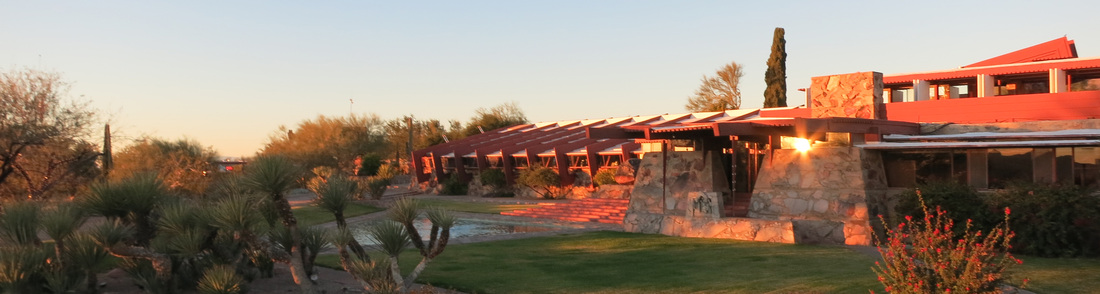
I have just returned from a journey to Frank Lloyd Wright's home and studio at Taliesin West in Scottsdale, Arizona. The trip was extremely successful, and also deeply inspiring. 

As many of our friends know, communitecture does a tremendous amount of outreach as part of our goal to inspire and activate people everywhere. We travel all over North America, to as many as four cities per month to share stories of how we have been able to achieve great things by working together with people to design and create sustainable and beautiful environments where communities may thrive together. These stories are always told as being in the context of Portland, Oregon where the larger culture is steadily evolving and becoming more sustainable as a whole. Our hope is that we motivate people to act where they live, to get off the couch and work to transform the spaces where they live into vital, beautiful, and sustainable places. 

This recent journey took me to Frank Lloyd Wright's home in the desert, the legendary nexus of visionary design known as Taliesin West. There is so much to say about the place, and of the experience of being there, and can share a little of it now. Foremost that it is a shockingly beautiful place that embodies and expresses all that Wright espoused during his long and brilliant life. The people who remain there are a thriving community, working well to understand and further develop Wright's ideas so that they are broadly owned, diverse, applicable to contemporary culture, and timely in their ecological relevance. 
Picture
Any visitor to Taliesin – and the Frank Lloyd Wright School of Architecture that still thrives there – will be blown away by the sheer power of its architectural reality and the living legacy of the culture and school that carries on more than 56 years after Wright's death. They have gone through a series of inevitable growing pains over those years, and have come through the other side still standing strong. The architecture school has an excellent, highly qualified faculty who bring a broad set of backgrounds and experiences to the design studio. They are doing an outstanding job of preparing their students for a very high rate of graduation and placement in the field, more than 90% in both categories.

The professors are doing well at interpreting an extremely strong design tradition that is the most creative of all schools in the USA, while at the same time instilling new ideas that appear to push the boundaries of what even Wright understood in his time. Urban issues, sustainability, and ephemeral projects all sparkle on the design boards of the studio, where an endless stream of brilliant ideas have been hatched before, for nearly a century.

Picture
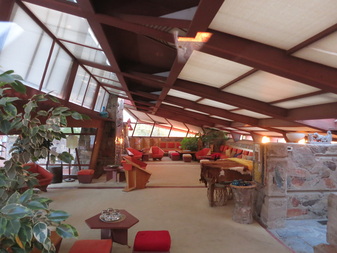
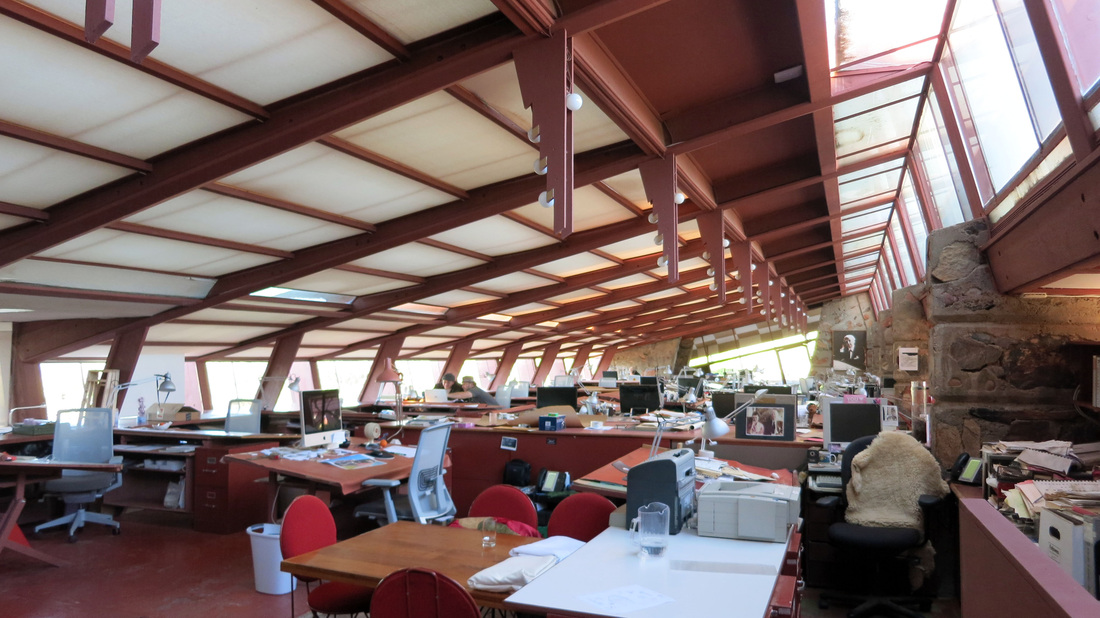
Talk about an inspiring atmosphere: inside the design studio of Frank Lloyd Wright & now the students at Taliesin West.
Picture
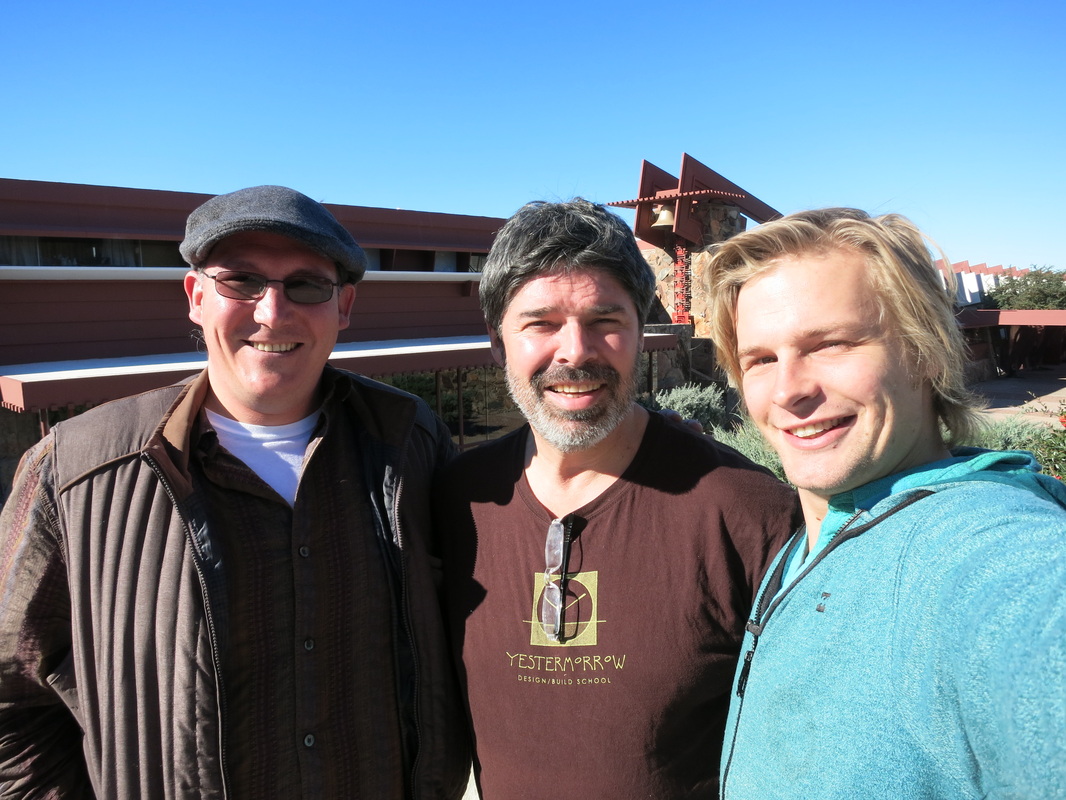
It's all smiles & thought-provoking conversation with faculty Michael DesBarres (left), student Daniel Chapman (right) and me, Mark Lakeman (middle)
Picture
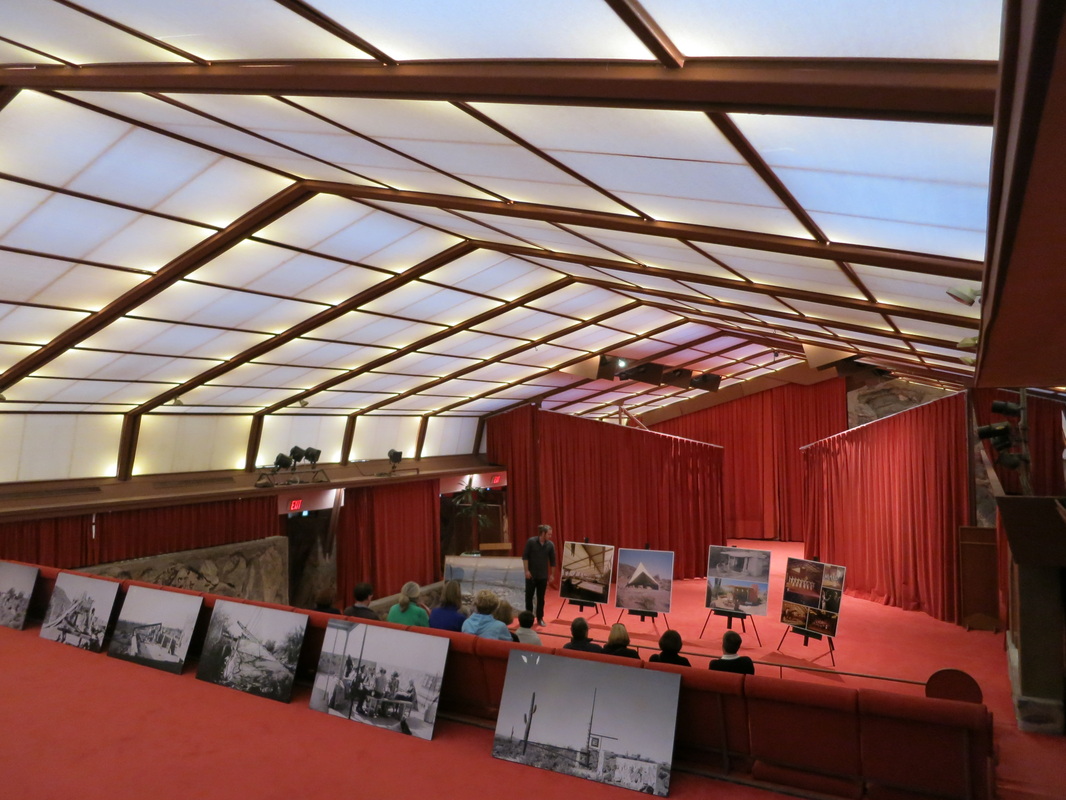
A peek inside the theatre where I presented on January 15th. 
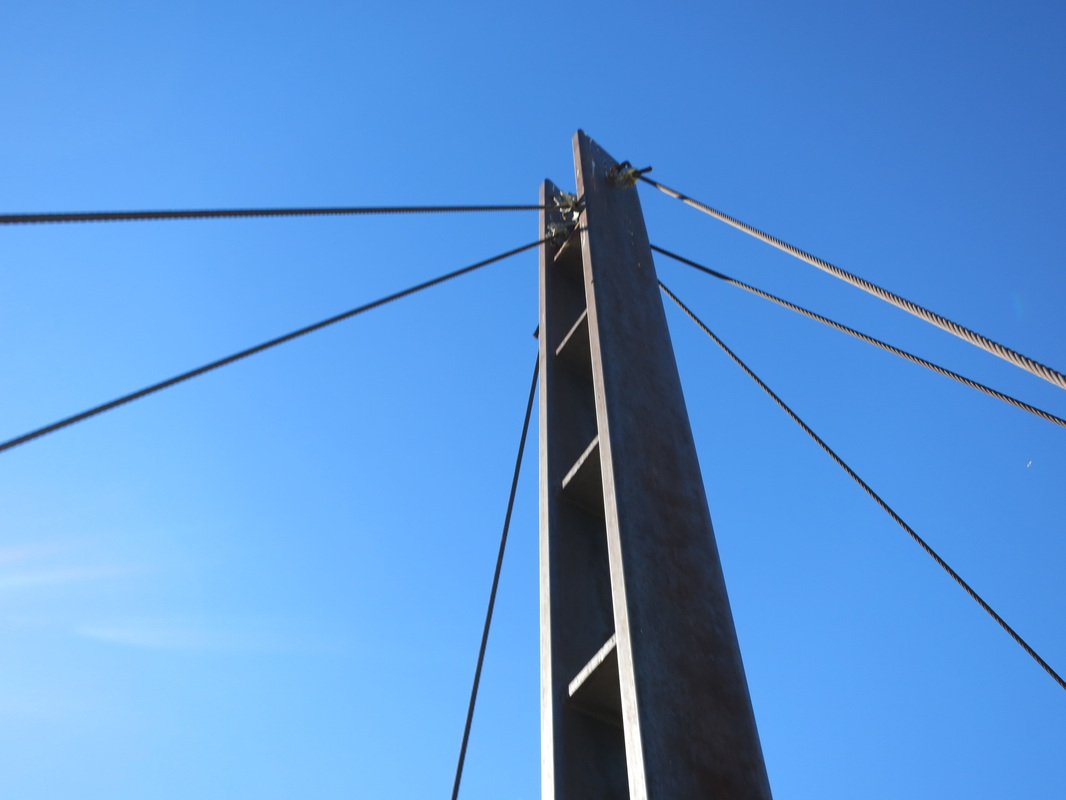
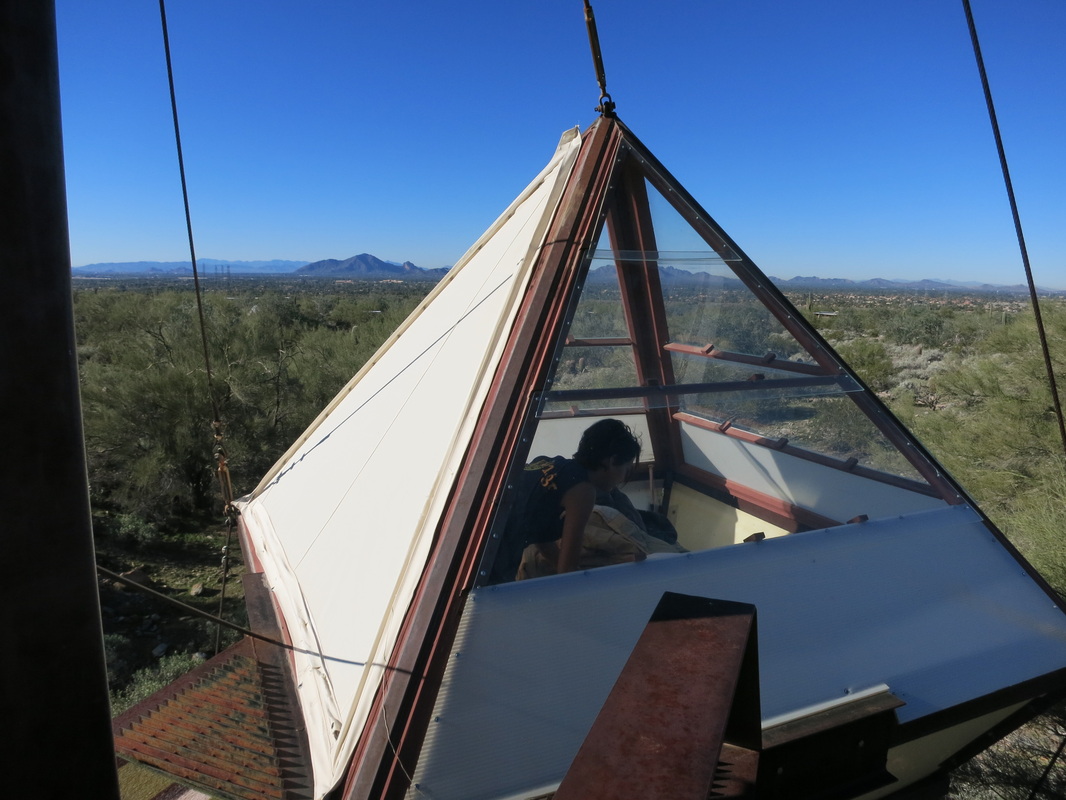
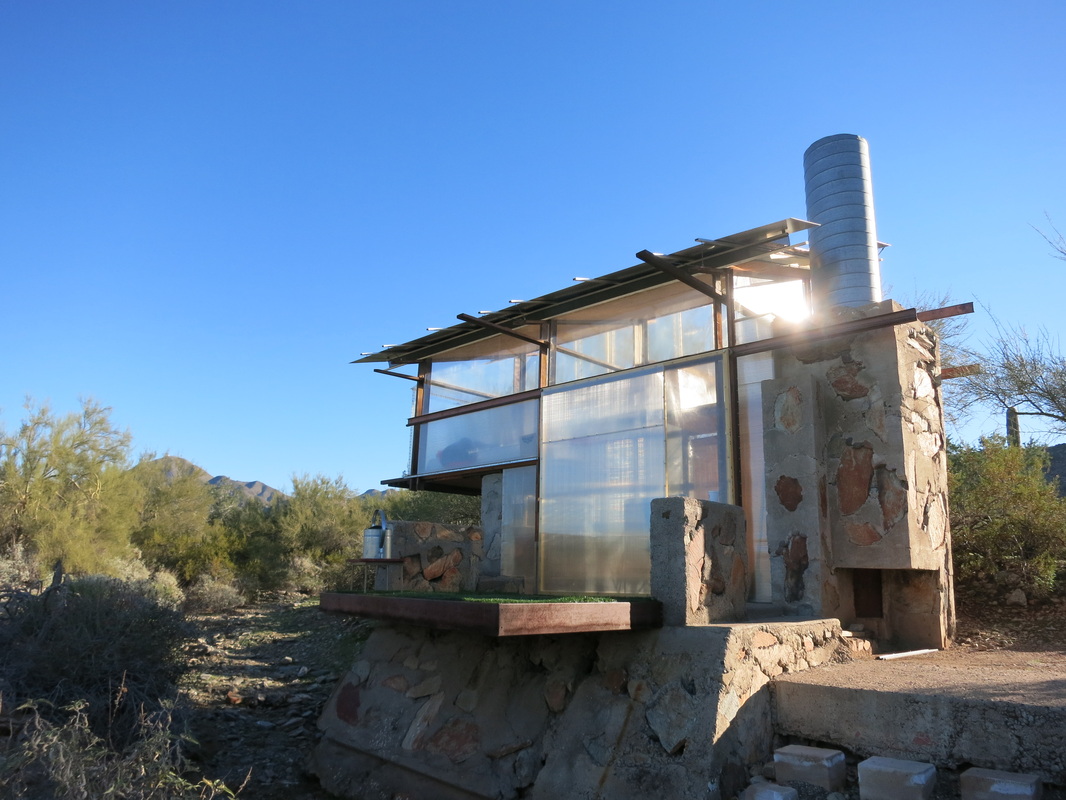
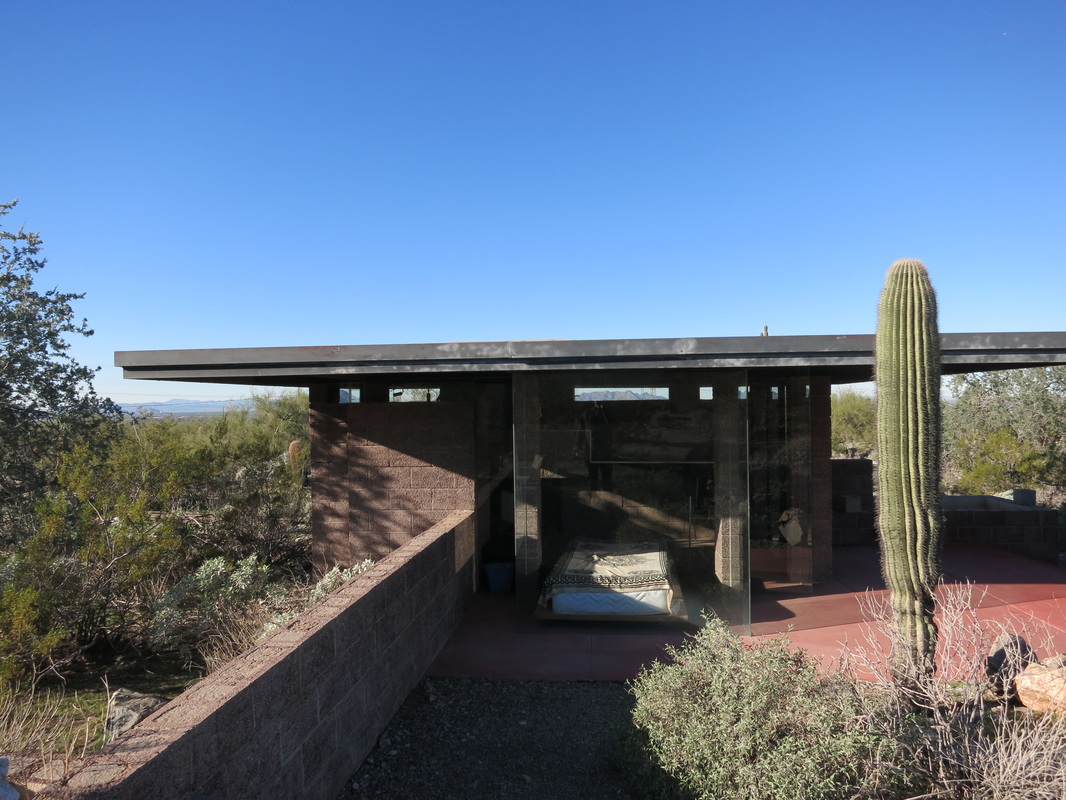
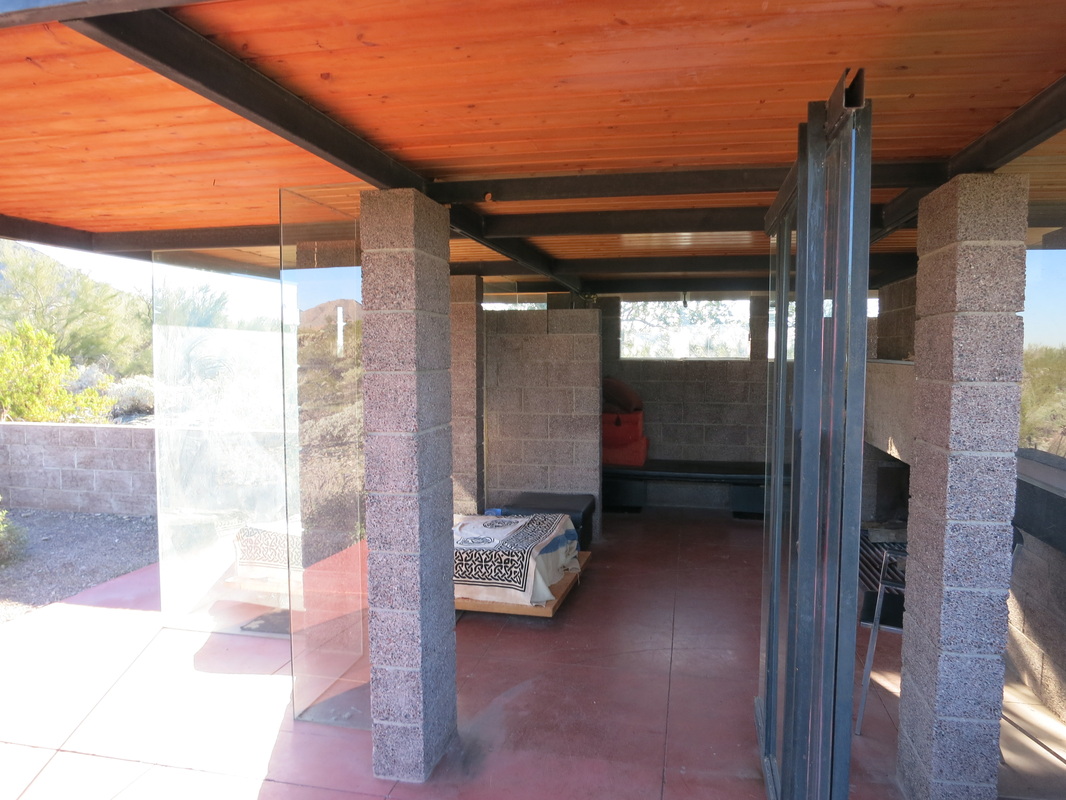
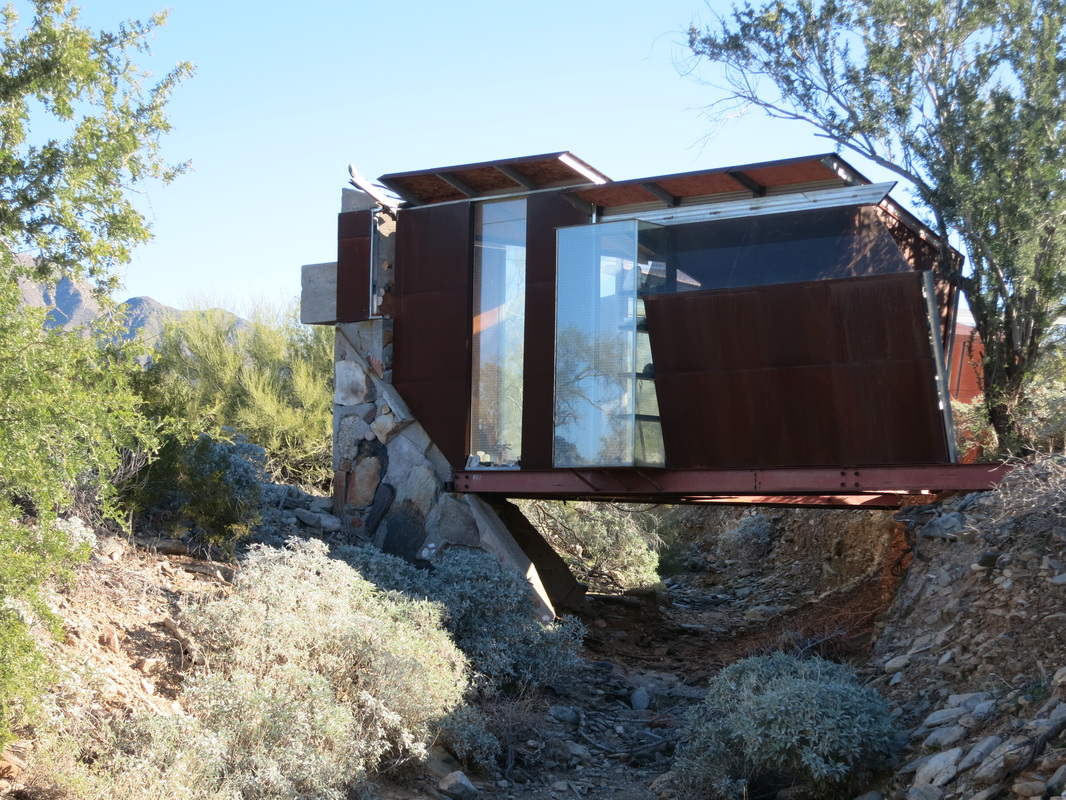
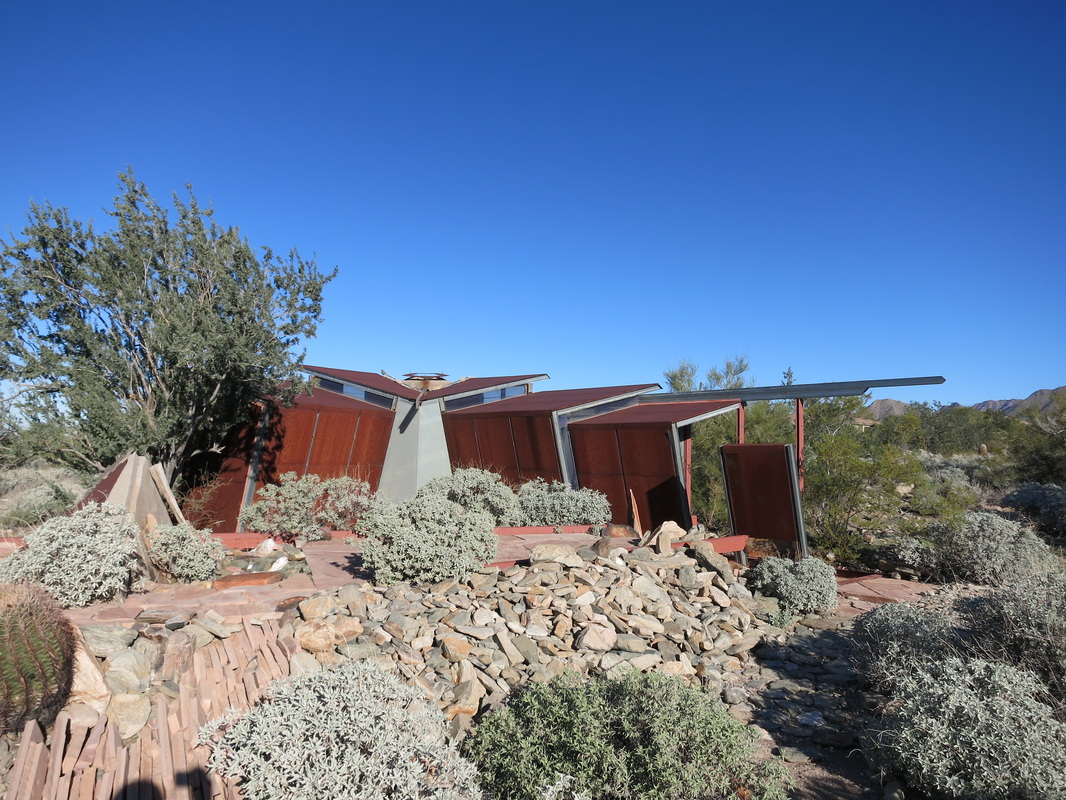
The Frank Lloyd Wright School has an accredited master's degree program, and the student body is as diverse and inspired as any. The students are energized, respectful, and immensely helpful to all who pass through their home. Out in the desert beyond the amazing campus that seems to rise out of the landscape and gleam, the students have built generations of amazing experimental housing projects. Some nestle into the landscape quietly, while other designs declare themselves in the sun and harshness of the relentless heat and climate of Arizona. 
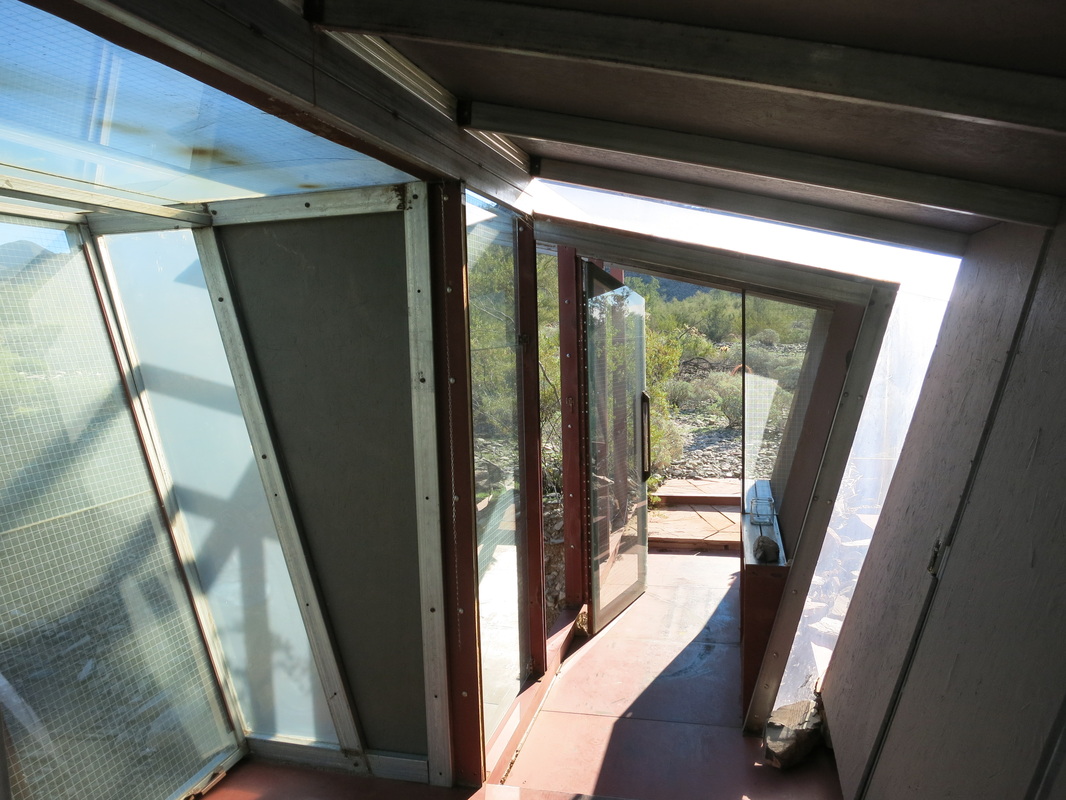
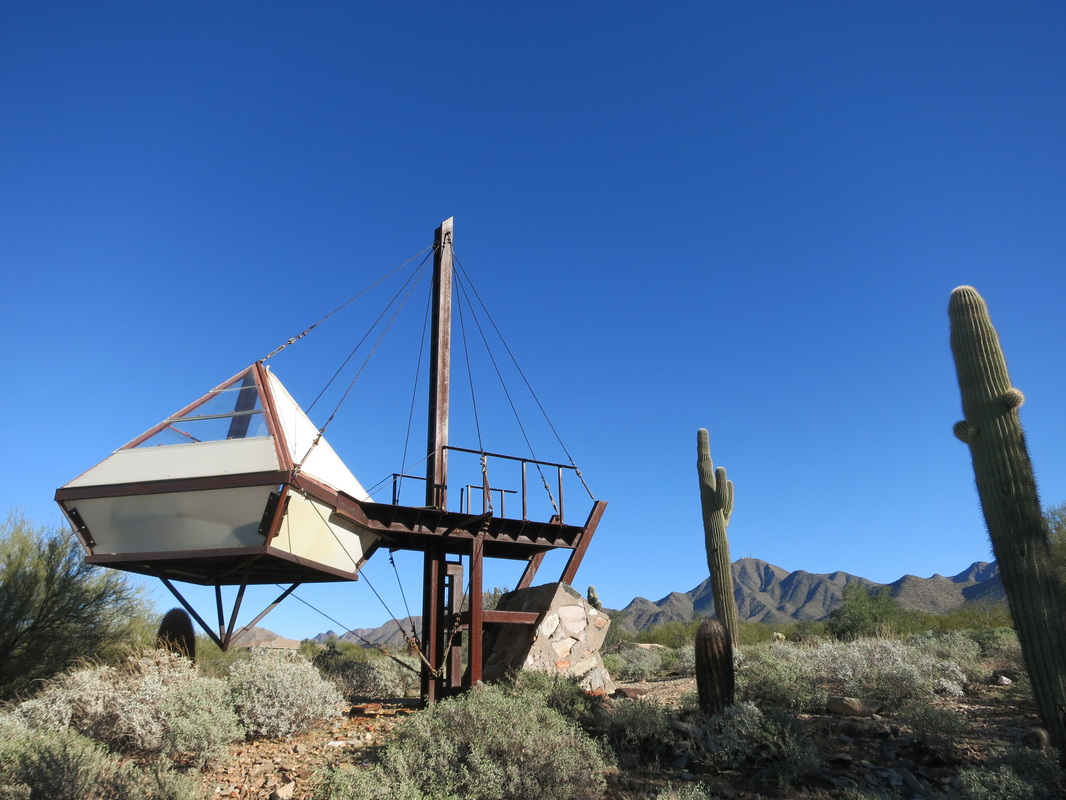
Here are just a few examples of the creative, student-built structures in the Taliesin landscape; this aspect of the architectural curriculum truly embodies the “learning by doing” educational approach advocated by Frank Lloyd Wright. 
Picture
Picture
Picture
Picture
Picture
Picture
Picture
Picture
Picture
The whole experience was viscerally transformative and it is difficult many days later not to continue feeling absolutely motivated. Wright proved that design could transform the world, to help people come closer to nature, to reflect the best of their character, to express solutions to vexing problems into the built world. Though he is no longer living, his ideas live on and are becoming stronger, not weaker, through designers like us who live on to carry forth the work of designing a better world.
Picture
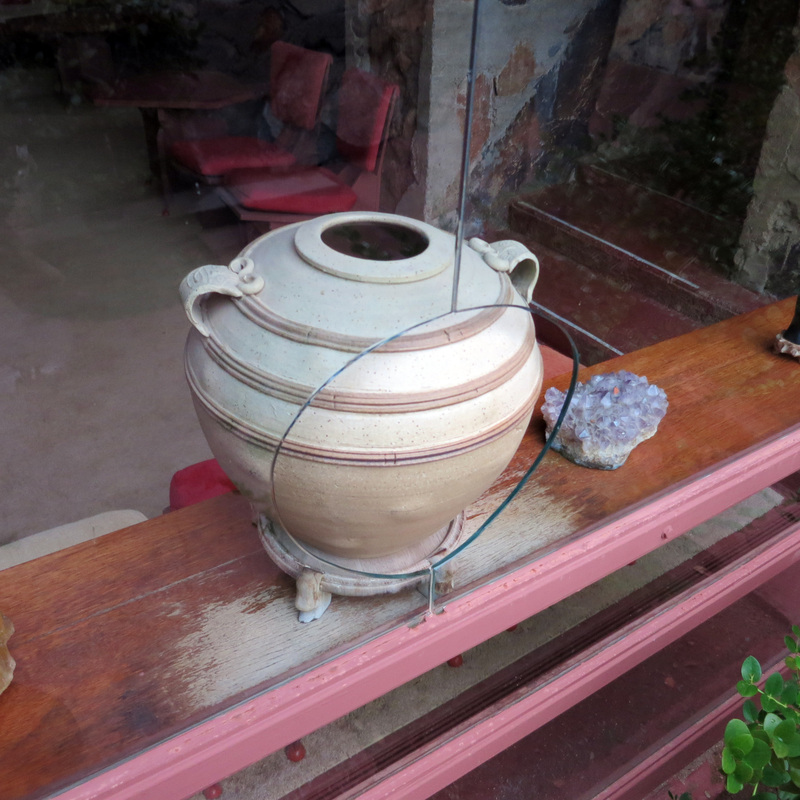
This is how Frank Lloyd Wright deals with a decorative vase that's too big for the window shelf: cut a hole in the glass! 
Picture
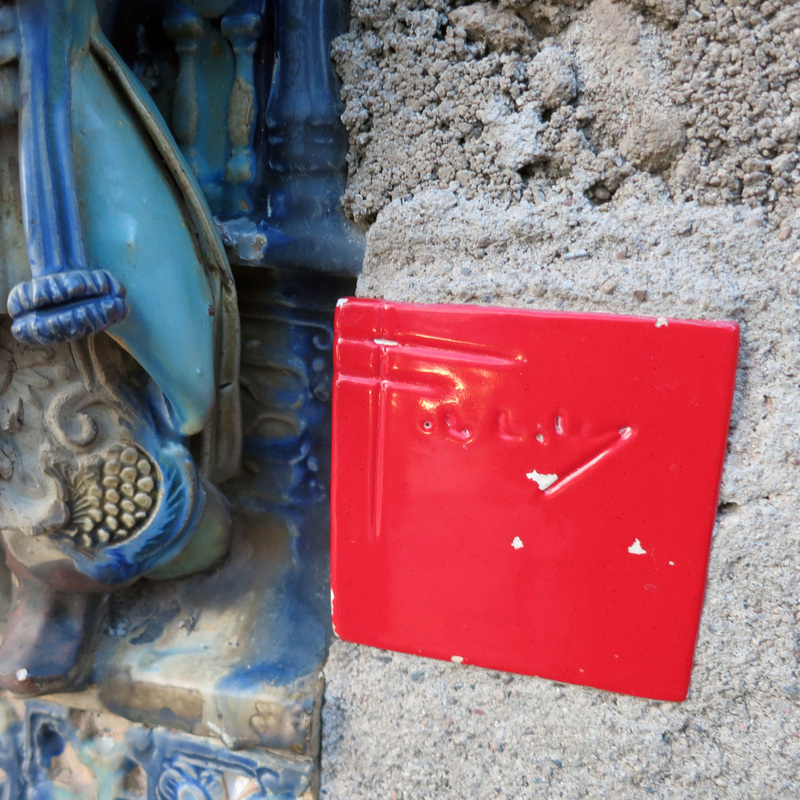
Every one of Frank Lloyd Wright's buildings includes his red "signature" tile; I found it at Taliesin!
Picture
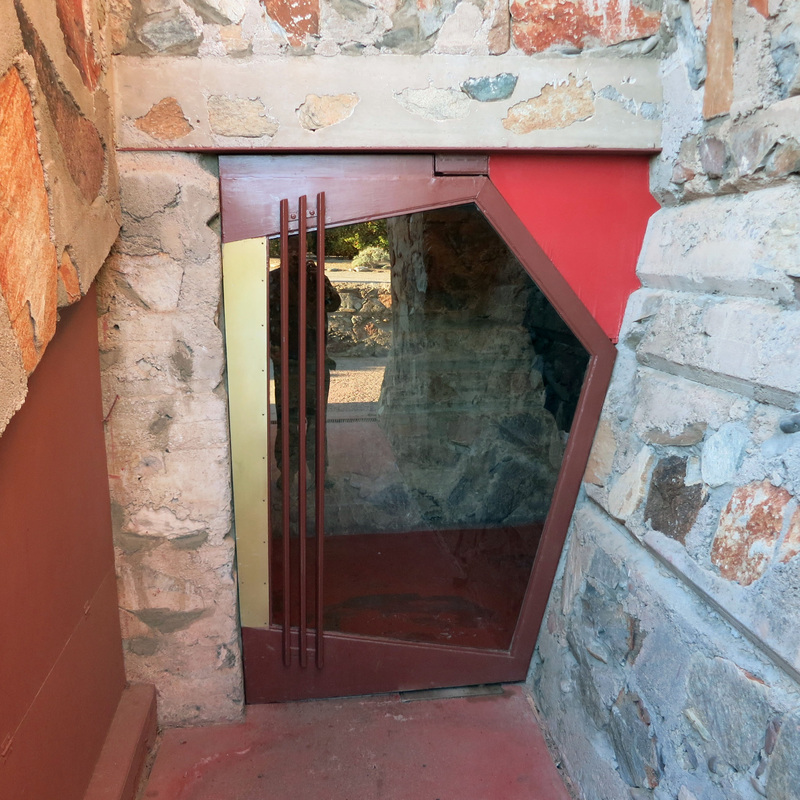
Even his building's doors are no simple design, but an elegant and expressive craft.
Picture
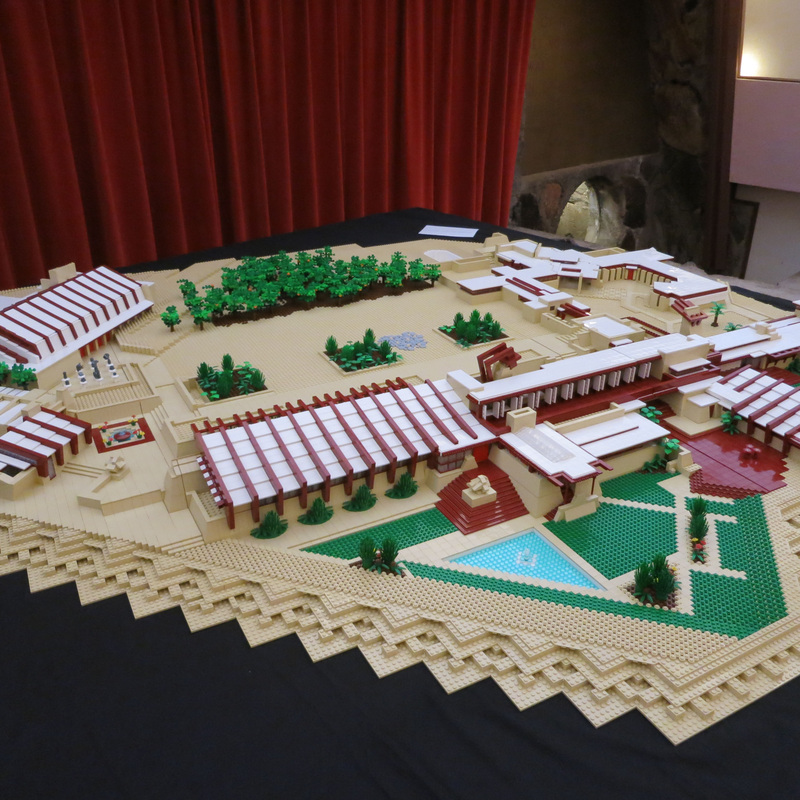
Even the giant LEGO model of Taliesin is on display here!
0 Comments

Our Table Farmstand is Open!

11/24/2014

1 Comment

 
Picture
Picture
Picture
Farmstand Grand Opening, check! 

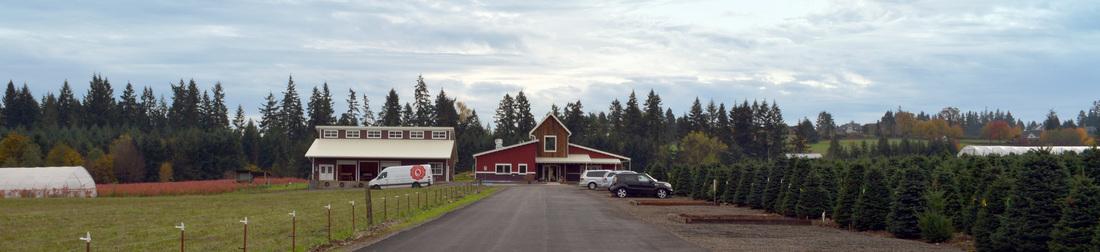
This amazing structure is one of many aspects to Our Table Cooperative Farm's property and vision...

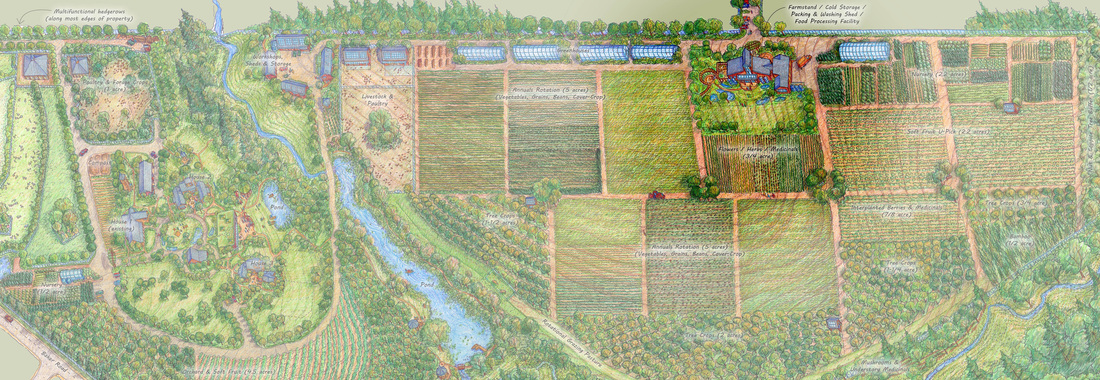
The 58-acre regenerative farm initiative has been designed using permaculture design strategies, including perennial crops based on “food forest” design concepts, optimum crop rotations, and cooperative ownership and management.  As a localization initiative, this project presents an exciting new dimension in the development of our regional food security infrastructure.  The grocery offers a curated selection of foods and products, including dairy, produce, meat, health and wellness, dry goods, and prepared meals.  A bulk section and a beer, wine, and growler station round out the offerings. The grocery is 85% Oregon sourced and 90% Organic with both vegan and gluten-free selections.
Picture
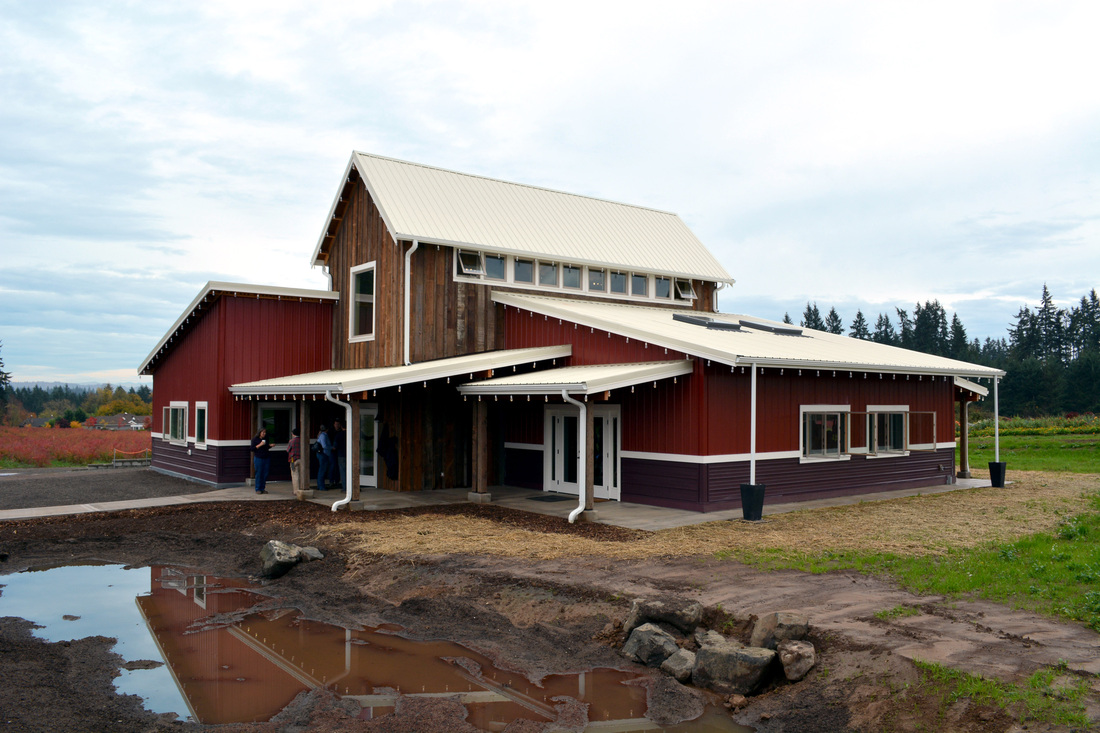
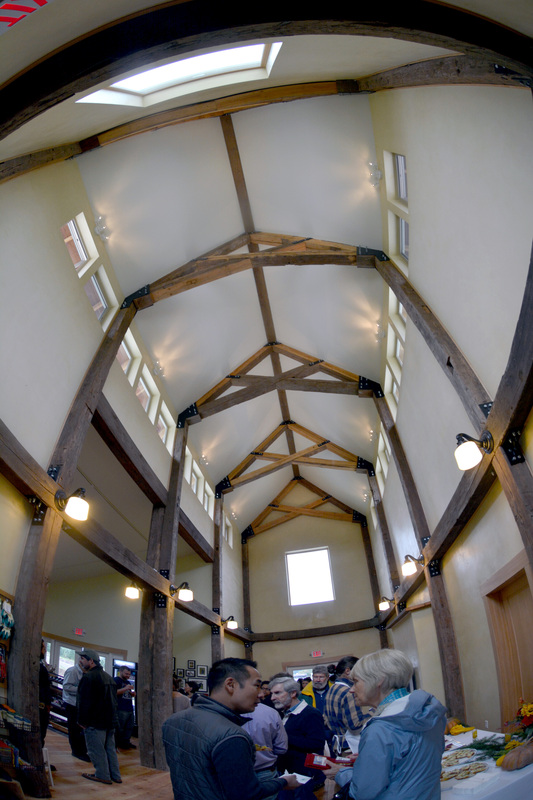
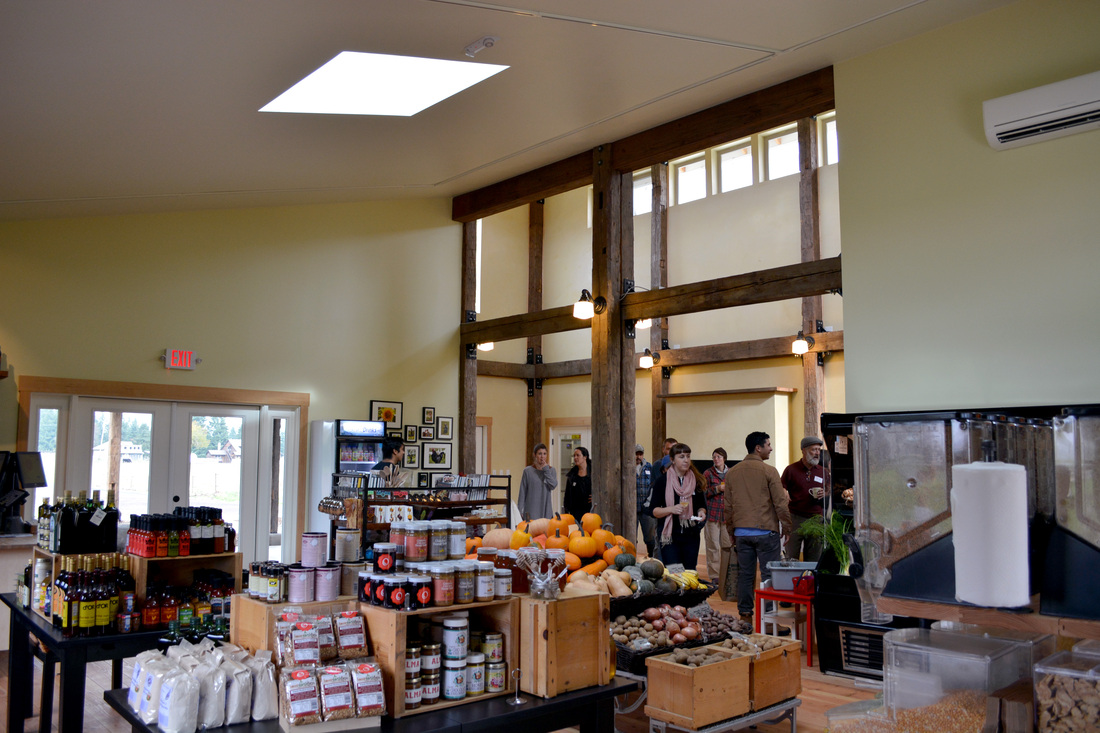
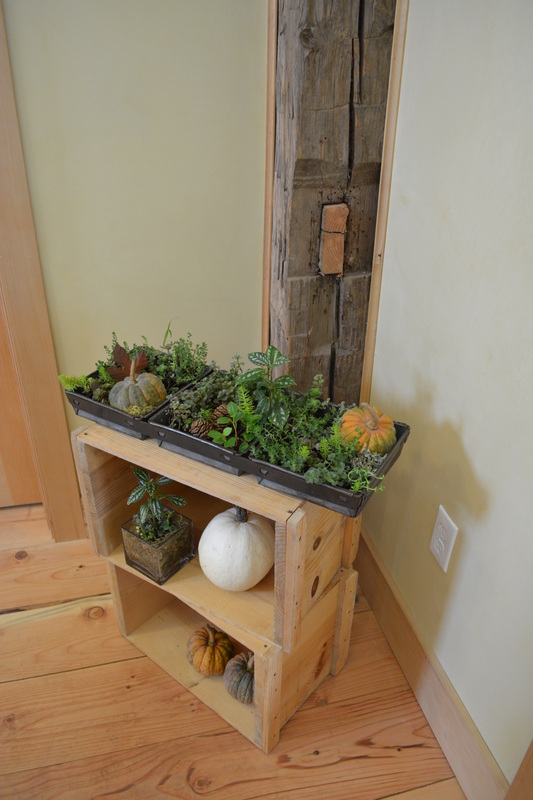
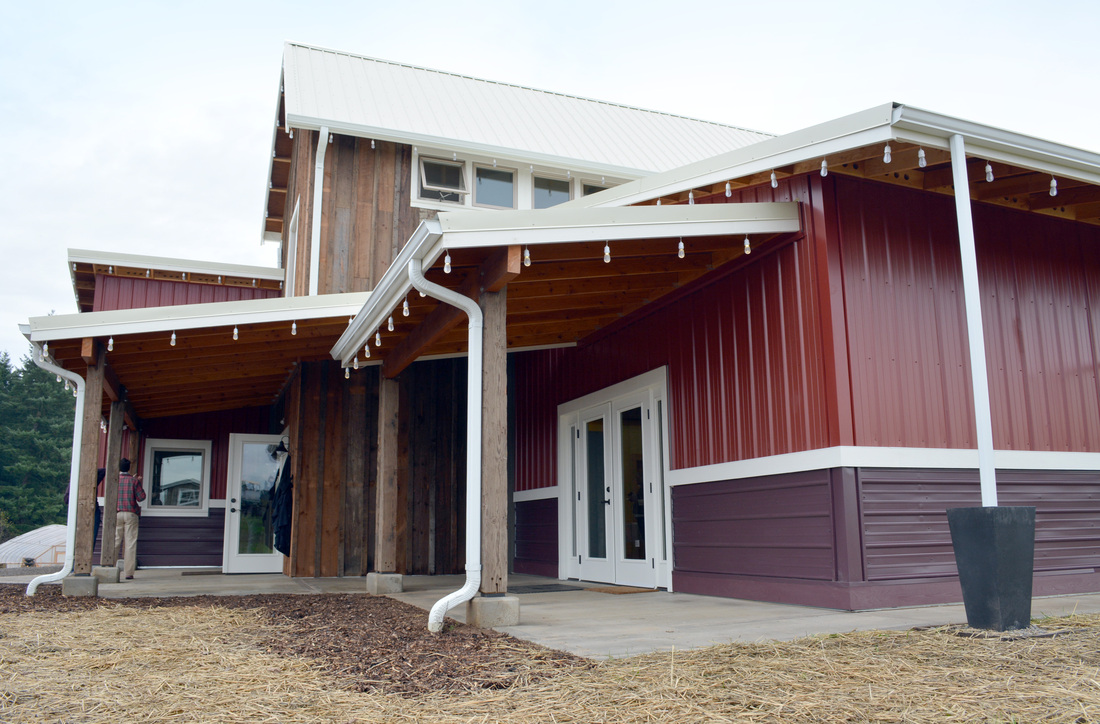
This 2,200 square foot farmstand building comprises a retail grocery storefront, commercial-grade commissary kitchen, and community gathering hall.  Sited adjacent to a packing shed and produce storage facility, hoop houses, and acres of Organic crops, it truly embodies the farm-to-shelf story of local, healthy products.  

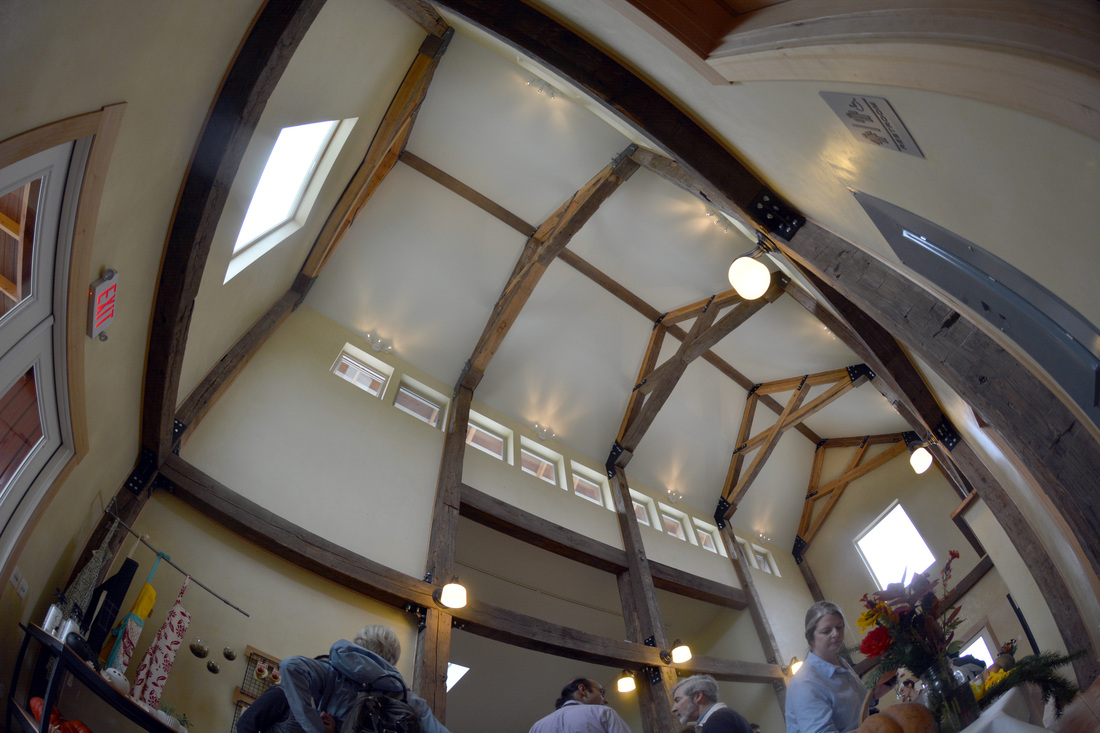
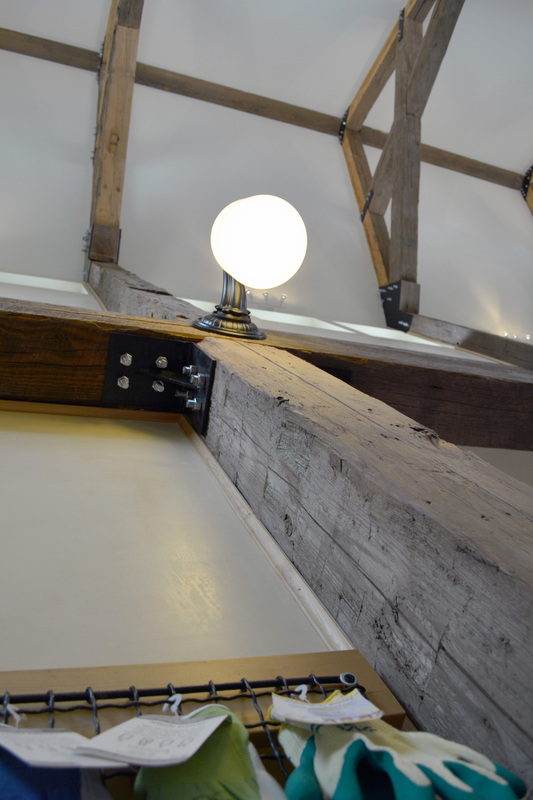
Integration of salvaged heavy timber from site-deconstructed barn became a focus of the building form and detail design.  Scissor trusses and an exposed structure help define and give scale to an elegant central atrium.  Operable clerestory windows facilitate passive cooling strategies while also creating dramatic shadows in evening sunlight and after dark.  The retail grocery space comfortably accommodates shoppers, while the generous central atrium helps the building to feel even more spacious and airy. 
Picture
Picture
Picture
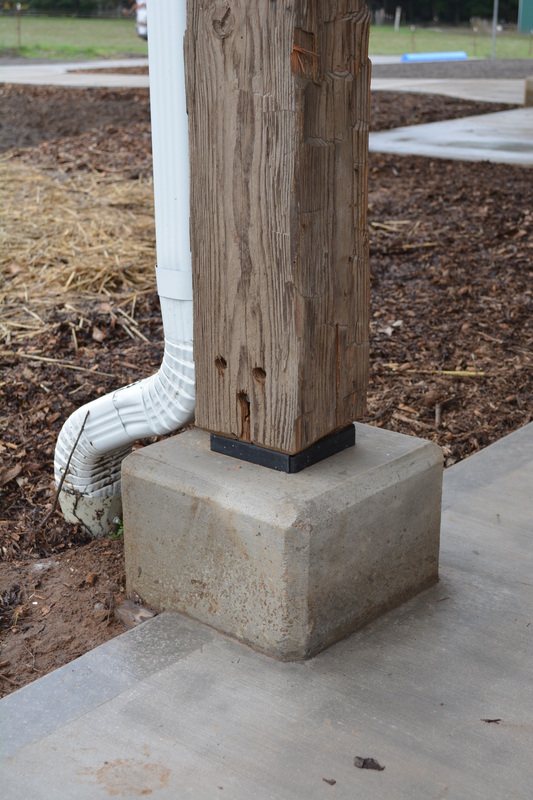
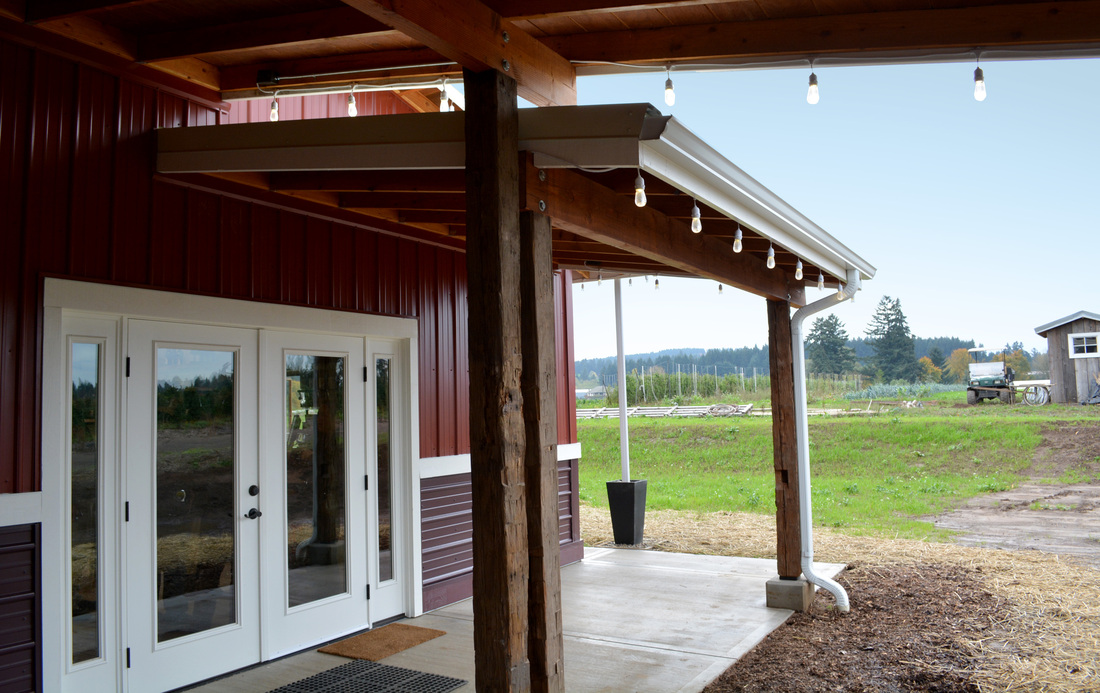
Wrap-around porches allow activity to spill outside year-round, surrounded by salvaged timber exterior columns which tie together the rustic material palette.  Careful detailing at the column foundations frame each connection, while elevated column bases further protect the salvaged timber from the elements.  The geometry creates a clean path for downspouts, and a nice place for resting your boot or to hop-a-squat. 
Picture
Picture
Picture
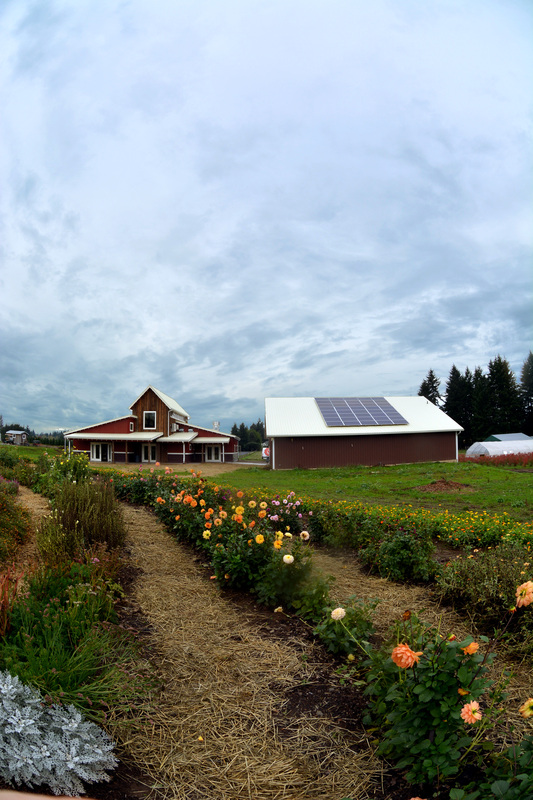
The design seeks to blend traditional and contemporary aesthetics while adding a playful twist to the form and color of the classic farm building.  The symmetrical, balanced gable roof at the center receives a hint of asymmetry with adjacent shed roofs attaching along different planes and the therefore the wrap-around porch roofs stepping back similarly.  

Many of the other metal-clad service buildings throughout the property follow a simple red and white color scheme.  As a special focal point, the farmstand receives a horizontal belly band to make it really stand out and drop to a human scale, accented in a complimentary plum color.  Salvaged lumber from the site is incorporated both on the inside and out, contributing to an overall cozy and cohesive feel to the entire project. 
Picture
Picture
Picture
Picture
We look forward to many more visits to this wonderful space... and hope you may, too!
1 Comment

The Green Building Wars

10/22/2014

0 Comments

 
Article from ArchDaily, 9/14/2014: Originally published by Metropolis Magazine, this comprehensive analysis by sustainability expert Lance Hosey examines the current disputes within the green building industry, where market leader LEED currently finds competition from the Living Building Challenge, aiming for the “leading edge” of the market, and the Green Globes at the other end of the scale. Arguing for a more holistic understanding of what makes materials sustainable, Hosey examines the role that materials, and material industries such as the timber and chemical industries, can have in directing the aims and principles of these three sustainability rating systems – for better or for worse.
Picture
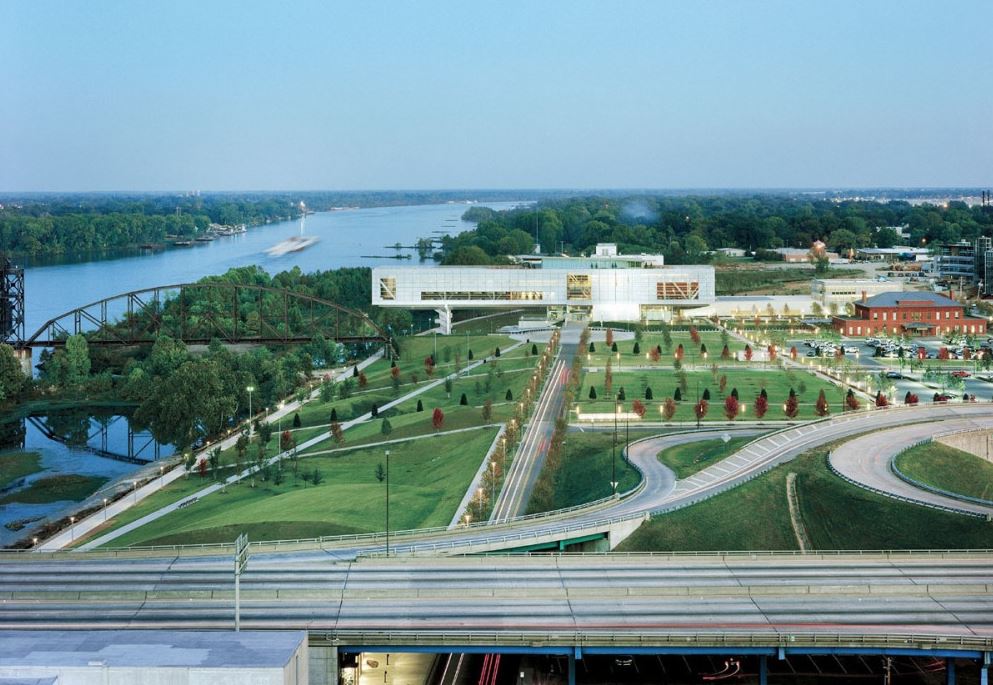
Above: The Clinton Presidential Center by Polshek Partnership and Hargreaves Associates received a rating of Two Green Globes from the GBI. But would LEED have rated it the same? Image © Timothy Hursley
Picture
What’s the “most despised” buzzword in the building industry, according to one survey? Green.

Little wonder, since the word can mean so many different things to different people. Before the U.S. Green Building Council (USGBC) launched the Leadership in Energy and Environmental Design (LEED) rating system in 2000, there was little consensus in this country about what constitutes a “green building.” A decade and a half later, some three billion square feet of construction have been certified under the system, and, according to estimates, LEED has cut annual carbon emissions by nearly ten million tons.

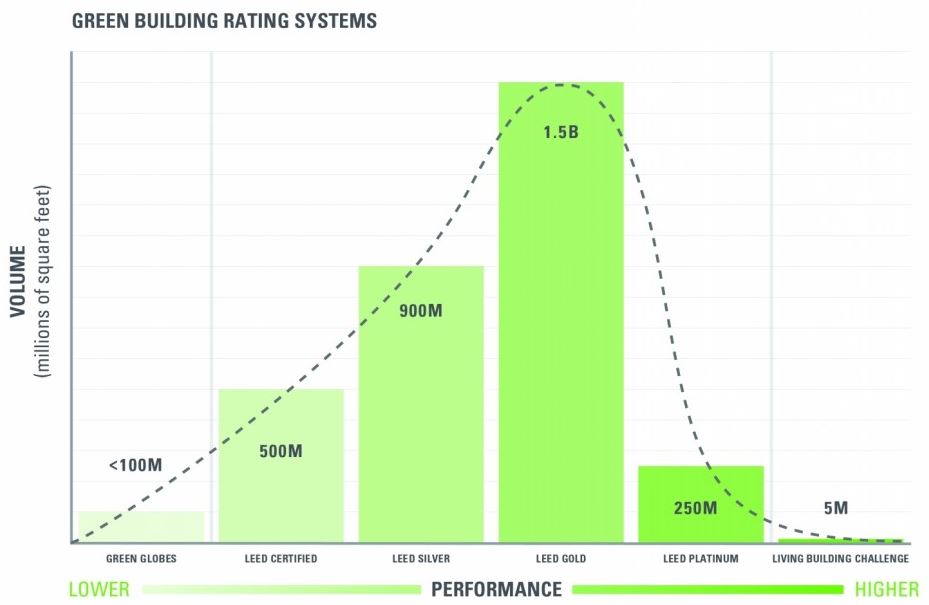
Still, some feel LEED doesn’t go far enough, a conviction that led to the 2006 formation of the Living Building Challenge (LBC), which many hold up as architecture’s most ambitious sustainability standard. If LEED serves the middle of the green bell curve, LBC targets the leading edge, an admittedly small segment of the market. What about the lagging end—the least common denominator of green construction? Even the most generous estimates suggest that only half of all new construction is being certified as “green,” and LEED’s entire volume to date represents only about one percent of the total building stock (275 billion square feet in 2010). To speed up the pace and expand the volume of certification, the construction industry urgently needs a quick, easy, affordable way to go green.

Enter Jerry Yudelson. At the beginning of the year, Yudelson, widely known as an authority on sustainable design, was named president of the Green Building Initiative (GBI). The organization runs Green Globes, an alternative to LEED that came to the U.S. in 2004-2005. In January, he announced that the goal was to address the underserved largest portions of the market with a system that is “better, faster, cheaper” than LEED.

Founded by Ward Hubbell, a former PR executive in the timber industry, Green Globes reportedly was set up as a shelter for wood products that don’t readily comply to LEED, which the American Forest and Paper Association has said “disadvantages our companies,” while “Green Globes is much more wood-friendly.” In recent years, the chemical and plastics industries have jumped on the bandwagon, because the latest versions of LEED discourage the use of certain “chemicals of concern,” specifically those found in products such as polyvinyl chloride (PVC)—the so-called “poison plastic” that the EPA, NIH, Department of Health and Human Services, and the World Health Organization all suggest can cause significant health problems. Greenpeace calls PVC “one of the most toxic substances saturating our planet and its inhabitants,” and it has been banned by various organizations, such as Kaiser Permanente.

While the LBC does prohibit PVC, LEED in fact does not; a single optional credit rewards disclosure of chemical ingredients, and specifiers are left to draw their own conclusions. Nevertheless, vinyl lobbyists take a classic slippery-slope position by treating even modest measures as threats.

Reportedly, over two thirds of GBI’s members and nearly half its board represent the timber, chemicals, and plastics industries—industries seemingly spooked by more rigorous standards for human and ecological health. Evidence shows that they’re not just backing Green Globes—they’re actively trying to undermine LEED, and there’s a lot of dirty money at play. From 2007 to 2013, the annual lobbying budget of the American Chemistry Council (ACC), a GBI member, grew by more than five times, and during that period this single organization invested a total of $62 million in influence-peddling.
Picture
Image: ArchDaily.com; Sources: US Green Building Council, International Living Future Institute, Green Building Initiative

It’s working: In 2012, a group of Congressmen, many of whom have received significant political contributions from the chemical industry and the ACC itself, urged the General Services Administration (GSA), which manages much of the federal government’s construction, to drop LEED: “We are deeply concerned that the LEED rating system is becoming a tool to punish chemical companies and plastics makers and spread misinformation.” They claimed that vinyl products “are universally considered the most durable, sustainable, and energy efficient by the construction industry” and that their restriction would “severely harm manufacturing in this country.”

Arguing that LEED (or the LBC, for that matter) seeks to “punish” chemical and plastics makers by discouraging the use of potentially harmful substances is like saying that energy efficiency is intended to punish fossil-fuel companies. Nevertheless, last fall the GSA, whose annual buildings budget can be in the tens of billions, endorsed Green Globes for the first time. Additionally, over the past year or two, multiple states, including Alabama, Georgia, Mississippi, and Ohio, have adopted legislation banning LEED in publicly funded buildings.

Given all of this, I was surprised this week when the USGBC and ACC announced that the two organizations would be working together “to improve LEED”: “USGBC and ACC share the goal of advancing sustainability in the built environment,” USGBC President and CEO Rick Fedrizzi wrote in a press release, adding that both entities “will work together to take advantage of our collective strength and experience.” Time will tell exactly what this means. Will the chemical industry embrace smarter solutions? Will LEED become more accommodating to status-quo chemistry? Or is this just the USGBC’s politically astute way to give the ACC a more formal avenue for discussion, in order to defuse anti-LEED lobbying?

In the meantime, Green Globes continues to try to get more market share, and the GBI remains dominated by the timber and chemical industries. So when Yudelson took over in January, I got excited, since I have known and admired him for years. Could he turn Green Globes around?

Immediately upon joining, he announced that he views GBI’s role as that of a “‘friendly competitor,’ rather than a nemesis” to the USGBC: “I don’t really see us getting engaged in anti-LEED activity as an organization.” Privately, he maintains the same position: “GBI is not a lobbying organization,” he assured a group of my peers and me in July. “We do not coordinate with any groups that might lobby for or against other green building rating systems, nor do we participate in such political discussions.”

Yet, in late January—two weeks after Yudelson’s initial claim that his organization planned to stay above the fray—GBI board member Allen Blakey, a vice president with the Vinyl Institute, testified before the Ohio state legislature in support of a proposed ban on LEED, calling its new material standards a “discriminatory and disparaging treatment of vinyl.” This isn’t “friendly” competition. GBI is a charitable organization whose tax-exempt status is contingent on protecting the public good, not private interests, and at least one of its directors appears to be toeing a very fine line between the two.
Picture
Chart from BuildingGreen, LEED vs. Green Globes: The Definitive Analysis (2014)

Since taking his new role, Yudelson’s positions seem to have changed in favor of private interests, as well. Last year, before joining GBI, he told a reporter, “We know that a lot of these substances [in materials] have long-term effects [on health].” Since taking his new post, however, he declares, “I haven’t seen persuasive data on the health outcomes of common building materials.” This April, Yudelson called vinyl “benign in use,” possibly contradicting a 2009 report he co-authored (“Inside Going Green”): “PVC is inexpensive and routinely used, but it presents serious fire smoke hazards. Even before it ignites, it releases deadly gases such as hydrogen chloride….Dioxin, the world’s most potent carcinogen, is released when PVC burns.” Since most buildings don’t catch fire, is the phrase “benign in use” Yudelson’s way of sidestepping the “serious hazards” he once attributed to vinyl? Regardless, the EPA, however, classifies vinyl chloride as a carcinogen and maintains that exposure can occur in everyday uses.

Even if the facts about PVC and other materials weren’t “persuasive,” as Yudelson claimed this year, scientists and sustainability leaders long have subscribed to the precautionary principle, which holds that “when an activity raises threats of harm to human health or the environment, precautionary measures should be taken even if some cause and effect relationships are not fully established scientifically.” Yudelson himself advocated for this approach in an interview last year: “[W]e may be creating long-term unhealthy environments even while we’re doing all of these green upgrades. The overarching principle is that we ought to err on the side of caution.”

Yudelson contends that Green Globes is “basically identical” to LEED. Last year, the Portland Tribune considered the merits of the two systems and concluded, “LEED is a more rigorous, broad-based, credible system that delivers more environmental benefits.” This June, the independent consultancy and publisher BuildingGreen released a 90-page “definitive analysis” and found that, in some cases—but only some—Green Globes can be “faster and cheaper” than LEED, as Yudelson insists. But “better”? No. The report specifically calls attention to Green Globes’ weaknesses around the health impact of materials.

In late May, a handful of green building experts and I met with Yudelson to discuss his plans for GBI. We specifically asked him about the board’s composition, anti-LEED lobbying, the health impact of materials, and other important subjects. While the conversation was pleasant, on these topics I found him to be evasive, but he said he would get back to us “within a couple of months.” On June 9, we followed up with a letter, signed by the sustainability leaders of thirty prominent architecture firms, imploring Yudelson to discourage lobbying and campaigning against LEED by stating publicly that GBI does not condone such activities: “We are deeply concerned that a continued campaign against LEED hurts the green building industry as a whole,” we wrote. “The real campaign should be one where all viable green building systems fight shoulder to shoulder to beat back the negative impacts of the built environment.”

Later that month, on June 25, Yudelson sent an email blast to hundreds of industry insiders, criticizing the BuildingGreen report: “Grow[ing] the overall green building market…should be our mutual goal, not engaging in attacks on the merits of one rating tool vs. another.”  On July 12, Yudelson finally replied to our letter from June 9: “I don’t think it’s my role or GBI’s to rise to the defense of a competitive product.” He also asked why we haven’t discouraged “relentless and unfair” attacks on GBI by other organizations (not knowing that some of us actually have spoken to others about raising the level of debate).

In response to this week’s USGBC/ACC press release, Yudelson emailed the group that met in May: “I hope [this will] cause your group to reassess where GBI is coming from in our preference that materials credits (and choices) be based on sound science and proven risk-assessment methods.” Again, this appears to be quite a different attitude from his past recommendations to embrace the precautionary principle.

Six years ago, in The Green Building Revolution (2008), Yudelson defined a “green building” as “a high-performance property that considers and reduces its impact on the environment and human health” [emphasis added]. The building industry urgently needs new solutions that drive wider adoption of green practices, but no sustainability standard can be considered credible today if it does not reflect the latest thinking about the health impact of materials.

Lance Hosey, FAIA, LEED AP, is Chief Sustainability Officer with the global design leader RTKL. His latest book, The Shape of Green: Aesthetics, Ecology, and Design (2012), has been Amazon’s #1 bestseller for sustainable design. Follow him on Twitter: @lancehosey

Citation: Hosey, Lance. "The Green Building Wars" 17 Sep 2014. ArchDaily. Accessed 22 Oct 2014. <http://www.archdaily.com/?p=549176>
0 Comments
<<Previous
Forward>>

    communitecture

    We design beautiful and sustainable places that bring people together in community.  We are absolutely committed to sustainability, while respecting the needs and priorities of all the individuals, families, and communities with whom we work and play.

    RSS Feed

    Picture

    Categories

    All
    Activism
    ADU
    Architects
    Architecture
    Art
    Building Science
    CoHousing
    Community
    Education
    Gardening
    Kids
    LEED
    Nature
    Passive House
    Permaculture
    Public Space
    Rainwater
    Sustainable Design
    Technology
    Tiny House
    Urban Design

    Archives

    March 2023
    January 2023
    August 2022
    May 2022
    March 2022
    February 2021
    September 2020
    August 2020
    June 2020
    August 2019
    July 2019
    May 2019
    December 2018
    October 2018
    September 2018
    August 2018
    January 2018
    November 2017
    October 2017
    July 2017
    May 2017
    February 2017
    December 2016
    November 2016
    July 2016
    June 2016
    May 2016
    April 2016
    March 2016
    February 2016
    January 2016
    December 2015
    November 2015
    October 2015
    June 2015
    May 2015
    April 2015
    February 2015
    January 2015
    December 2014
    November 2014
    October 2014
    September 2014
    August 2014
    July 2014
    June 2014
    May 2014
    April 2014
    March 2014
    February 2014
    January 2014
    November 2013

    RSS Feed

Picture


Projects

About Us
Blog | Updates
Team


Contact
    
1421 SE Division Street | Portland, OR 97202 | 503.230.1293 | [email protected]